Pages

Showing posts with label Writing. Show all posts

Saturday, September 3, 2016

BLISS (Or What We're Doing for 5th Grade Home School)


Welcome to BLISS!
What's that?

Blossom Lane Institute of Spunky Sparkle.

Really.

That's what we decided to name our home school this year. She came up with the spunky sparkle part, because she's all about that. And I love the acronyms. I couldn't resist this one. It sums up what I want our school to be, which is anything but dull and pointless. We're happy to be together.

Every morning we point to the glittery BLISS letters on our school supply bins and chant: "Blossom Lane Institute of Spunky Sparkle!" Then we give a high five and say, "Welcome to BLISS!" 

That's how we start our day. It's the best. And if we hit a little rough spot and get cranky, we go back to our happy chant and start over again.


~*~*~

This year, as with the last two, I only have my youngest daughter home for school. It's been so much less complicated teaching just one than several at a time. She's in 5th grade, so I just love getting to dig in deeper with her.

She will probably go to public school next year. So that means I need to make sure she's up to speed on all of her basic skills, as well as teach her whatever content I want to make sure she gets before I send her off to middle school.

Here's our plan...

For math, we do flash card and oral drill to keep her multiplication facts fluent. She's finishing up a basic math workbook from last year, and then we'll move on to Spectrum 5th Grade math. She does Sum Dog and other math game web sites on-line.

For language arts, she has a Spectrum 5th grade Reading comprehension workbook, a Grammar Minutes workbook left over from last year, the Writer's Express text that I used with some of her older siblings, and a writing prompts journal. I have other resources available for later in the year, but this is enough for now. She's doing creative writing on her own a few times a week on the computer.  Plus, she chooses a novel to read on her own for literature. Right now it's Mr. Popper's Penguins.


I keep her daily books and flash cards in a basket on the floor so I can reach in easily and hand her the next one when we're working together in the morning. I marked the top of each one with the subject so I can find them easily from the top at a glance. I also have a larger basket with other resources we don't use daily but want to have handy.


The real fun for me is social studies. This year we'll be in a world geography co-op on Mondays where she will learn about culture and mapping. There isn't any homework (yay!) so the other four days we get to do our own thing. Last year my goal was to cover world history from the earliest civilizations up through the Middle Ages. We didn't finish the Middle Ages, so I decided to pick up with that again and go as long as we want. Then we'll move on to the Renaissance and Reformation era, which I'm guessing will take us up to Christmas or even beyond. I want to take the scenic route through this period of history since there is so much to learn. We love art and music, and I have a bunch of great children's biographies and historical fiction with important concepts! The public schools do world history in 6th grade, so I'm not worried if we miss some of the later time periods. However far we get, I'll at least leap frog forward to World War 2 and Holocaust studies at the end of the year.

One of the key resources we are using right now is What Really Happened in the Middle Ages, a collection of short biographies compiled by Terri Johnson. So far we have read chapters about Theodora and Alcuin.


This one below is from my own childhood in California. I have several in the series. I wondered as a young home school mom over 20 years ago where these had gone. Oddly enough, I found them in my grandparents' attic in Pennsylvania. I have loved using them with each of my children here in Florida. They are easy to understand with great words to learn for vocabulary. 


So far with both of those books, I have started a spiral notebook for copy work. I jot down several phrases or sentences with key facts for each story and she copies them either while I read to her or later on. I encourage her to use her best handwriting, and pay attention to spelling and punctuation. She also does oral narrations of whatever we read, telling me what she remembers from the story. These are Charlotte Mason approach methods. 

Here is a sampling of some other books we'll be using for the Middle Ages and then the Renaissance and Reformation era.


For science, we are taking the opposite approach. In the past, we've done unit studies on various science topics but they haven't been very comprehensive. I don't know where I found this 5th grade text, but it's a thick and visually attractive book with chapters on all the major science topics to fill in whatever gaps she has. So far we've learned about cells and part of classification for living things.


Our whiteboard easel always comes in handy for science.


We also had a membership at the Orlando Science Center, which just expired, but we managed to pack in four visits in the first few weeks of school, once with two of my grandchildren.


My daughter is an enthusiastic artist. Her favorite YouTube channel is Art for Kids Hub which features drawing videos. She has hundreds of drawings in her portfolio. We organized all of her art supplies into a rolling cart which she stores in her bedroom closet. I think she spent far more on art supplies as the school year started than we did on other school materials. She has dabbled in acrylic paints. We'll do more tie dye this year, and we're both going to learn how to use a wood burning tool. She's already a pro with a hot glue gun.


Like me, she is also an art museum fanatic. We have visited six of the local museums, some of them more than once. Last week, we took a spontaneous trip to one of our favorites, the Morse Museum of American Art, which claims the largest collection of stained glass work from the studio of Louis Comfort Tiffany and his colleagues.

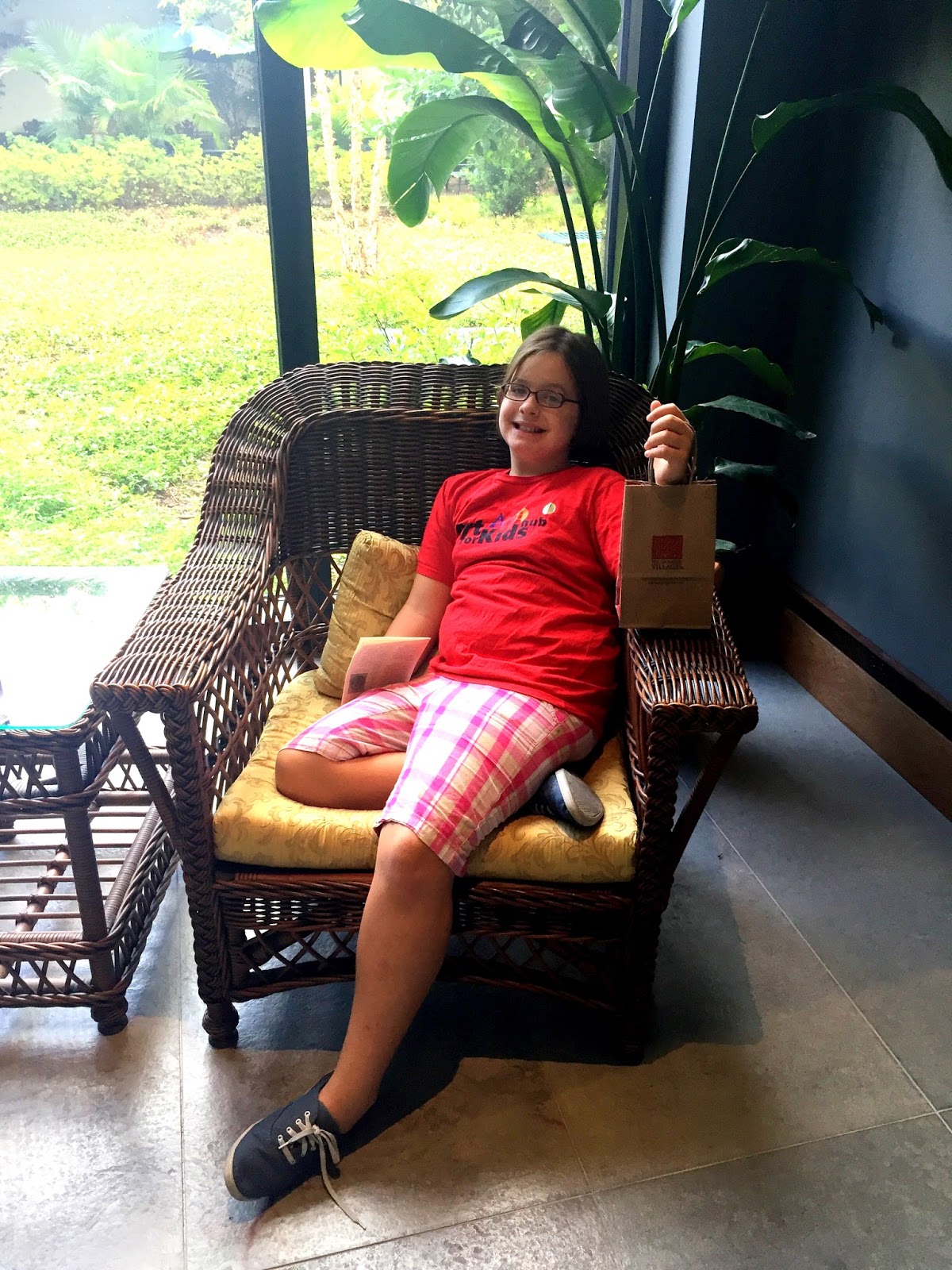


One craft project that we did is making calming glitter jars. That's definitely a lot of spunky sparkle!


She also loves to cook, so she's done several kitchen projects like pancakes, eggs, cookies, smoothies, and other yummy treats. Of course I'm glad she gets extra hands on practice with planning, reading instructions, measuring, food safety, and other practical skills. 


So that's what we've got going so far!

Related posts:


God bless!

Wednesday, May 25, 2011

Summer Writing with Journals and Blogs

Dear friends,


We are officially finishing our school year this Friday, though we have been tapering down for a couple of weeks.  I still want my kids to keep their brains active over the summer, especially with math, reading, and basic writing skills.  (Those are the 3R's, right?)  Yet I don't want them to feel like they are "doing school" (or at least much of it) during our time off. Two of my kids have some of their math workbooks to finish up (oh well!), but I think we can also come up with some hands-on projects and games to use their math skills.  They already like playing Monopoly, Pente, Yahtzee, and other games.  They can read books of their choice from the library about subjects that interest them.  


For summer writing, my first big idea is to have them keep informal journals about what they are doing and thinking each day.  In fact, my 10 year old daughter has kept a journal this past month, and it seems to be an engaging and fairly painless way to get her to write.  Not only that, it gives me an extra window into her world.  The journal is a cute, colorful little one with puppies on it.  I bought it at a dollar store.  Nothing intimidating!  She likes to write about her baby nephew coming to visit, or what she is making, all the fun things she thinks our family should do this summer, or sometimes that things that frustrate her.  I didn't start journaling until I was a teenager, and though there were long gaps during my adulthood where I didn't keep one regularly, it's still I habit I try to cultivate.


My second summer writing idea, also something we're already doing, is blogging.  All of my school age kids, except for the one in kindergarten, have their own blogs.   This is a particularly fitting idea for middle school, especially if your kids know how to upload photos and videos.  Most of them are private, accessible only to family members, but it gives them a way to learn and have fun at the same time.  They often write about educational activities like bird watching or science experiments.


Give it a try!


What are your plans for continuing a learning lifestyle during the summer?  Leave a comment for me!


See also:
Blessings,
Virginia Knowles
www.StartWellHomeSchool.blogspot.com

Tuesday, November 9, 2010

Elementary Writing Ideas

Elementary Writing Ideas

This post is excerpted from the Language Arts chapter of my book Common Sense Excellence: Faith-Filled Home Education for Preschool to 5th Grade.

Writing Formats

For a well-rounded education, your child needs to learn several different kinds or formats of writing. Here are some of the most useful ones:

Lists: These may not seem creative, but they help your child organize thoughts, and serve as an introduction to the venerable outline which he will use in later writing projects. He might write a list of:

  • foods he wants served at his birthday party
  • things he wants to do during the summer
  • kinds of insects he has seen in the backyard
  • books he has read this month (let him keep his own school records!)
Acrostic: An acrostic is a rather creative list in which each item starts with a different letter in a chosen word:
Graceful dancer
Red polka dot shirt
Always hugs and kisses
Neat house with lots of toys
Doesn’t scold
Makes yummy cookies
Awesome!

Poems: There are many different forms of poetry: simple rhymes and jingles, Limericks, free verse, haiku, etc. A good poetry anthology is a treasury of examples, but a book on writing poetry will give you specific instructions.

Letter writing: What a practical way to build writing skills and communicate with others! This can start with a preschooler’s simple “I LUV U” notes, and progress to letters to relatives and friends outside of your home. Grandparents always seem to appreciate this, and many children will want pen pals. When my oldest daughter was first starting to write letters, I got rather tired of her asking me how to spell “Dear Grandma” over and over again. I made her a letter writing guide on a piece of sturdy white poster board. It had names of all family members to whom she might be writing, plus common phrases like, “Thank you for the...” and “Please write soon!” and “Love always.” It also had the format for writing addresses on an envelope. If your child is not ready to write a whole letter by himself, you can help him with it. For example, you could have him tell you what he wants to say. You write it out neatly, and he can type it or copy it in his own handwriting. Using attractive stationary is a great incentive for neatness. Letter writing is a project with a purpose! The main parts of a letter are the heading (date and address in upper right corner), the salutation (“Dear Grandma”), the body (the child’s thoughts and ideas), the closing (“Sincerely” or other capitalized phrase followed by a comma) and the child’s signature.

Family newsletter: Send this to friends and relatives. If you do this each year, why not have each child write a paragraph about his or her own life? You might be surprised at what they think is important or not. Family newsletters are often produced on a computer, so this may be a good time to introduce inserting graphics or digital photographs into a word processing file, using a column format, and playing with fonts.

Realistic descriptions: Before you set off on a big writing project, start at the word, sentence and paragraph level. A full writing assignment for a 2nd grader might only be two or three sentences at first. Work at developing the child’s power to describe an object or situation with specific, interesting words. Many writing teachers explain that our words should “show and not just tell.” Painting a vivid picture with words helps the reader imagine it in his head. Instead of saying “I ate some food,” a child should progress to describing what kind of food and how they ate it: “I munched on a crunchy red apple” or “I gagged on that last disgusting spoonful of slimy noodles.” You can make a game out of this. Give him a very general word, such as furniture, and then have him get gradually more specific: seat, couch, green couch, sagging green plaid couch, sagging green plaid couch that is covered with cat hair. This activity helps teach observation and classification skills.

Short story or narrative: This can be something that happened to the child (“Write what you know!”) or a made up tale. One of the key things to remember is that a story needs a beginning, middle, and end. In the beginning, you introduce the setting, the characters, and the start of the plot, perhaps the dilemma of the main character. Then you develop the plot throughout the middle part of the story. At the end, you attempt to resolve the problems and bring closure to the situation. (For a young child, this usually means, “And they all lived happily ever after!”) Meanwhile, back at the sagging green plaid couch: “Tony flopped down on the sagging green plaid couch. Muffin, his plump tabby cat, rubbed against Tony’s blue jeans. Tony reached down to stroke her velvety fur and sighed. At least he had one friend in this world!” Ah, do you see the story unfold? Now, why is Tony upset? What are you going to do to solve his problem? The plot thickens! No, you don’t have to write a whole story right now. It’s OK to leave it hanging; this might just draw your child back for another exciting session tomorrow! You could also start with a plot idea and then fill in the character and setting details from there. If your child can’t think of a story topic, you might want to give a story starter; Harvey Weiner includes several pages of these in his book Any Child Can Write. I once gave my eight year old daughter three random words/phrases (clown, school bus, and flower pot) and asked her to tell me a story about them. I was trying to make it very easy for her by doing it orally. Instead, she giggled, snatched a pencil and paper, and disappeared. A half hour later, she handed me a hilarious tale which she hadn’t bothered to punctuate at all. The words had just gleefully tumbled out on the page. If I had made her do spelling and grammar at the same time, I would have gotten only two or three very dry and dutiful sentences. I’m just glad she had a fun story writing experience, because attitude is everything!

Picture journal: Show your child a picture (photograph, masterpiece painting or simple illustration) and ask him to write about it: what he sees, what may be happening, what the people in it may be thinking, etc. You could also use a series of pictures, such as snap shots he took on your last vacation, and ask him to write a short narrative or even simple captions. Many families use acid-free archival quality albums, colorful background papers, plastic templates and special markers to create beautiful lifetime memories with their children. Another option is for the child to draw pictures and then write the text to go with them.


News report: Answer the 5Ws and the H: Who, What, Where, When, Why and How? Check your facts. Write a spiffy headline. How about doing a whole neighborhood or home school support group newspaper?

Biography or autobiography: The word biography, translated from the Greek, means life-picture. An autobiography is a self-life-picture, and can be an expanded personal narrative covering the sequence and flow of the child’s life thus far, rather than a single event. If your child likes to read biographies of famous people, he might want to write a simplified version about one of his favorites. Create V.I.P. page forms with spots to record the name, their claim to fame, when and where they were born, what their childhood and/or family life was like, a quote, other interesting information, and a list of books they have read about the person.

Factual report: This is the format which most extends into other areas of the curriculum, such as history (“Living in a Sod House on the Frontier”), geography (“Let’s Explore Italy!”) or science (“All About Bobcats”). A kindergartner might start out with one or two sentences: “A turtle is green. It has a hard shell.” A first grader could write one paragraph, a second or third grader might do up to a page, and an ambitious older elementary child might complete up to two or three pages. A longer factual report is usually divided up into sections, requires an outline, and has a short bibliography of resources used; it obviously takes more planning and more abstract thinking. If your child is producing this report using a computer, teach him how to import pictures (maps, photos, diagrams, etc.) from an Internet site, CD-ROM encyclopedia, digital camera or scanner.

How-to Instructions: Your child gets the chance to be the teacher with this format of writing! “How to Eat a Bowl of Spaghetti Without Getting a Red Face” or “How to Make and Fly Paper Airplanes” could be useful topics for this age. Here are a few things to remember when writing how-to instructions:
Essay: Also known as an persuasive piece or opinion piece, the essay gives your child a chance to speak her mind. In a one paragraph format, the first sentence can tell her main point, the next few sentences can expand on it or prove it, and the final sentence can restate or summarize it. If the essay is longer, the first paragraph will state the thesis, the middle paragraphs will cover each supporting point, and the end paragraph will summarize the writer’s opinion. Don’t worry if you never get to this format in elementary school, as it will resurface in high school. However, if you have an ambitious writer in your house, it never hurts to prepare ahead of time! One of the best motivations for essay writing is when your child wants to persuade you to do something or buy something. Then you say, “So write me an essay on why you think I should take you to Sea World next week!” This is another fine example of writing with a purpose!
  • Be complete. You know all of the steps and ingredients in your brain. Make sure they all make it to the paper.
  • Be sequential. Don’t skip back and forth between steps. People will be doing them exactly as you write them.
  • Be consistent. Each of your steps should be presented in the same basic sentence style, which will usually be a command.
  • Be flexible. If there is an optional way to do a step, and it can be explained simply enough, add it in.
  • Be interesting. Find a way to spice up what could be a dull list of instructions.
Book report: What did you like about that book? What did you learn that you hadn’t known before? What were your least favorite parts? Who was the author? Who were the main characters?
Related Posts with Thumbnails