Pages

Sunday, November 22, 2009

Outdoor Fun and Freedom!

Dear friends,

You have so many freedoms as a home school family!

Read a book in a tree?  Sure thing!


Picnic on the lawn?  You bet!


Recycle an old slide set up on a courtyard wall,
add a plastic picnic table for a step up,
and make the slide slippery with a watering can? 
Why not?


OK, so you might need to live in Florida
to do some of these things outside right now,
but I'm sure you can figure out something fun to do
whatever the weather!

Have a blast!
(And keep your camera handy!)

Love, Virginia

Great Gifts Kids Can Make for Others


GREAT GIFTS KIDS CAN MAKE FOR OTHERS 
  • Pomander balls: Roll a foam ball in glue, then add spices. Pin on ribbon, lace, silk flowers. OR Push whole cloves into an orange and then decorate.
  • Soap: Cut soap glycerine into chunks, put into a glass measuring cup, melt it in the microwave, mix in the dyes and soap scents (if desired), pour into molds, wait about 15 minutes, and pop them out. Very easy to make, and very easy to clean up! You can get all of the supplies at a craft store.
  • Potpourri sachets: Wrap potpourri (scented dried flowers) in a square of net and tie shut with a pretty ribbon OR sew the potpourri into little fabric pouches.
  • Painted plaques: Buy a plain wooden plaque, cover with a coat of acrylic paint, then add decorative details with contrasting colors. You can use a gold metallic marker to write a poem or Bible verse.  (See below for one I made.)
  • Decorative pillows: Buy a pillow form, then make a decorative cover for it using your sewing machine. You might try making a patchwork design for one side.
  • Hair scrunchies: These are basically a short piece of elastic in a tube of fabric, sewed into a circle. You may need to experiment a little bit.
  • Coupon books good for personal services: a back rub, household chores, babysitting, etc.
  • Cookies, candy or other food items

Advent Adventure Unit Study for December

Dear friends,

Many home educating families lay aside much of their traditional school routine during the month of December. They use the extra time for an "Advent Adventure" unit study.

  • Read and write Christmas stories and poems. See Three Christmas Poems for Children
  • Read Christmas books.  See My Favorite Christmas Books.
  • Look at Christmas fine art in online museums.
  • Learn about holiday traditions in other cultures and time periods.
  • Say Christmas greetings in other languages. (Feliz Navidad!)
  • Publish an annual family newsletter for relatives and friends.
  • Practice addressing envelopes for Christmas cards or invitations.
  • Make crafts for fun and/or for gifts.  See Great Gifts Kids Can Make for Others
  • Make Christmas ornaments.
  • Host a Christmas Craft Day for neighborhood children.
  • Listen to holiday music.
  • Sing Christmas carols.
  • Use Christmas carols and poems for Charlotte Mason style copy work or dictation.
  • Play Christmas music on instruments.
  • Learn the stories behind favorite Christmas carols.
  • Attend a community sing-along of Handel’s Messiah.
  • Go see the Nutcracker Ballet.
  • Perform in church Christmas pageants.
  • Make a video of Christmas preparations and celebrations.
  • Participate in community service projects.
  • Make or display a collection of nativity sets.
  • Decorate the house.
  • Do price comparisons for Christmas shopping.
  • Plan menus / entertainment for a party or company meal.
  • Bake cookies and other holiday goodies.
  • Use Christmas items (cookies, ornaments, etc.) for basic math practice: counting, multiplying, putting in groups by dozens, weighing, putting in order by size, etc.
  • Visit relatives.
What do you like to do?   Leave a comment!

Wednesday, November 18, 2009

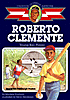
Childhood of Famous Americans: A Must-Read Series

One of the very first recommendations I received from a veteran home educator was to read titles from the Childhood of Famous Americans series to my children. WOW! What a find! These books have engaged my children since the early 1990's. The flame was recently rekindled as my younger children took an interest in the bright red, white and blue covers gracing our shelves. We have been eagerly reading about the childhood lives of famous Americans, learning some very interesting lesser-known facts about people we have come to admire.

Each book is packed with noteworthy experiences, personality traits, and adventures about the girl or boy who eventually grew up to be the inventor, scientist, statesman, president, educator, or explorer we knew only as an adult. The books bring the young person to life, incorporating events to which a child reader can relate. We have found ourselves mindful of the childhood experiences and personal gifts which eventually contributed to the famous American's greatness. By the end of each book, the reader is left with the desire to find out what happened next, a perfect lead to further study.

The Childhood of Famous Americans (COFA) series, praised by parents, teachers, and librarians for over 65 years, was first introduced to the public in the 1940s and continued to be printed into the 1960s. Originally printed in hardback form, these fictionalized biographies (suitable for independent readers third grade and up or to be read aloud to any age) became instant favorites and were reintroduced in an infamous red, white and blue paperback form in the 1980s.

The original hardback covers can be found at http://www.readingwell.com/pg-childhoodfamousamericans.htm

In recent years, several publishers are working to bring the once-out-of-print-titles back to life. A great endeavor, however in the process some of the books have undergone editing and rewording. One publisher, Patria Press, began reprinting the stories in 2002, renaming the series Young Patriots. Find out more about the titles they have reprinted at http://www.patriapress.com/.

Whenever we begin new unit of study or a new period of American history we try to find a COFA title to personalize our learning. Visit http://www.redshift.com/~bonajo/COFA.htm for a listing of all the titles arranged by era.

The hardcover originals are, of course, our favorite because of their old feel. Now considered vintage books they can be difficult to find. If we cannot get our hands and eyes on these treasures, we look for the well-known red, white and blue covers.

Want to learn more about the heroes and heroines who shaped our country? Find a COFA title and relax on a comfy couch. You and your children will discover inspiring details from the lives of the men and women whom we often know only through their adult accomplishments.


Tuesday, November 17, 2009

The Purple Elephant and an Interview with Donna McFarland

"Don’t touch the purple elephant!" the king warned, but the purple elephant’s skin looked so soft that Prince Carmel couldn’t resist. He stretched out his hand and gently touched the elephant’s face. Immediately, the purple elephant raised his trunk and trumpeted. Then, he reared up on his hind legs...”

Start with the adventuresome Prince Carmel Cornelius, then throw in a mysterious purple elephant, a friendly fire-breathing dragon, a wicked wizard, a reluctant princess, a chattering parrot, plenty of cocoa cookies, and a generous dose of humor. What have you got now? A fun 78 page picture/chapter book with an imaginative tale that is sure to delight your children either as a bedtime read aloud or as a read alone. My kids laughed a lot while I was reading it to them. At one point, one of them snuck off with it to finish it, not wanting to wait for the rest of us.  Later, we couldn't find it and staged an all out hunt for it -- we were determined to finish it! I think we managed to polish off the book in three sittings since my kids were eager to read several chapters one after another. We all need upbeat and life-affirming things to read!

I know that some home school families are concerned about the use of fantasy, but rest assured that the wizard really is presented as wicked and all of it is just plain fun. The Purple Elephant is not a Christian book per se, but the values in it are quite compatible and the author, Donna McFarland, is an very sweet Christian. That’s a tale in itself! Donna was actually one of my very first Christian friends. I met her in 7th grade, about a year before I met Jesus, and her encouragement helped me so much as a new believer. We’ve kept in touch ever since then -- and she still looks the same: friendly and full of joy! A few years ago, Donna and her husband Scott adopted a baby boy, and this ultra-clever preschooler (who goes by the name Munchkin on her blogs) is the inspiration behind much of her writing. Donna also teaches music at Eugene Bible College in Oregon, and is passionate about cooking with organic, locally grown food. This past summer, Donna wrote, “We went blueberry picking last week. Munchkin wasn't really interested in picking berries, only popping them into his mouth (from my bucket). He had hoped there would be kids to play with, but when we got to the farm there was no one but grown-ups. Finally, a family arrived, but I overheard them talking in a language I didn't recognize. I told Munchkin that the kids might not speak English -- a hard concept for him to grasp. He puzzled over that one and then he crawled beneath a blueberry bush. When the kids approached, he let out a "RRRROOOOAAAARRRR!" There was a moment of stunned silence, and then the little boy responded, "RRRROOOOAAAARRR!”

Check out Donna’s blogs at: www.chocolate-crayon-family.blogspot.com/  and www.the-purple-elephant.blogspot.com/

The Purple Elephant is available from Amazon both in color ($15.95) and in black and white ($9.95) versions.

Now, for a special treat, an interview with Donna!

Tell me about how you wrote The Purple Elephant.


As a child I loved to read and I’ve always wanted to write a children’s book myself. The times I tried, though, I stumbled over the plot. So when I happened upon Chris Baty’s book, No Plot, No Problem: A Low-Stress, High-Velocity Guide to Writing a Novel in 30 Days, I was intrigued. Baty proposes a writing method in which you just write, write, write, and then edit later. He founded National Novel Writing Month (NaNoWriMo) which is a web based group. Tens of thousands of people participate by writing 50,000 words in the month of November. I decided to give it a try, and that is how my first draft of The Purple Elephant came to be written.  (Virginia's note: my sister Barb and two of my daughters are participating in NaNoWriMo this year!)

It turned out that writing the first 50K words was the easy part. I spent the next two years cutting and rewriting and then hired a professional editor to help me finish the job. Illustrator Kim Sponaugle's watercolors perfectly captured the look I’d envisioned. Kim is also a believer and was a joy to work with.

You wrote the book for your son whom you adopted. Can you tell me a little about that?

My husband and I were very blessed to carry Andrew home from the hospital when he was just one day old. After a lengthy attempt to adopt, our agency told us that it didn’t look like the domestic program was going work out for us so we should look at international programs. We prepared mounds of paperwork and were days away from sending it all to China when we got the call that a birthmother here in Oregon had chosen us.

The adoption process was grueling. Along the way, I felt like I gained new understanding of faith and I learned more about God’s character. The passage in James about considering it all joy has new meaning for me and, five years later, I’m still seeing growth that resulted from all our trials.

I wrote The Purple Elephant for Andrew when he was still a baby. If I’d known, I would have included firemen and tools, but instead he got a handsome prince and a talking parrot. Andrew loves the story and illustrations, but he still doesn’t quite understand why Mommy’s picture is on the back cover. He is all energy, all enthusiasm, obsessed with construction and has a gift for language.

Tell me about your blog.

I began my blog (http://www.chocolate-crayon-family.blogspot.com/) around the time Andrew learned to talk. He said such cute things that I wanted to share them, but if I didn’t write them down I’d forget them a day later. Blogging turned out to be the perfect medium for me because I could record the cute little stories as they happened and share them with friends and family.

After a short time blogging, I realized that I had things to share of my own and my blog became a way for me to write about my interests which include cooking from scratch with local & organic food, environmental issues and books. I am an avid reader, which is probably where I got my love for writing, and I write book reviews for my own blog and for The Blogging Bookworm. I don’t intentionally preach, but I hope that my Christian faith shines through. I try to be salt and light.

You’re also a piano teacher. How does that fit into your life?

I studied music in college and I’ve taught piano lessons since I was 16. I finally found my calling when I was hired 13 years ago to teach music theory at Eugene Bible College. Most of the students at EBC are headed into full-time ministry and so music is very important in their studies. I get to work with future worship leaders to teach them not only the basics of music theory and how to play the piano, but I also get to influence the values and attitudes that they will bring to their future churches. It is exciting to be able to help shape these young leaders.

So what can you tell me about your new book?

The Purple Elephant is just plain fun. I wrote it in such a way that it could be read a chapter each night as a bedtime story, but I’ve found that most kids just like to read it straight through. The story is lighthearted, funny and is the sort of story that I want to read to my son. And if you want to bake the cocoa cookies, the recipe is on the website listed on the back cover of the book (http://www.the-purple-elephant.blogspot.com/).

Saturday, November 7, 2009

Choosing Your Approach to Home Education: Where Are You Coming From?

Dear friends,

Are you trying to choose or modify your approach to home schooling?  Here are a few things to think about...

WHERE ARE YOU COMING FROM?

Let’s talk about you for a few minutes. The preconceptions that you bring to the planning stage have been formed by your own childhood, the research you have done about education, and your experiences teaching your own children so far.

Recall your childhood educational experiences. Recollections of our own school years profoundly influence how we think about the whole process of education. If you have negative memories of a particular method or situation, you may be tempted to avoid anything that reminds you of it. I encourage you to consciously acknowledge these thoughts, and make an informed decision about whether or not this will affect what your children do. For example, when I was in fifth grade, I didn’t perform up to my potential using self-paced Independent Learning Units (ILUs). Though I was intelligent enough, I was too lazy to motivate myself. I could have used that failure as a basis to avoid unit studies in our own home school. However, I realized that one major problem with the ILUs was a lack of careful oversight by the teachers, which was something I could overcome while teaching my own children.

Ask yourself these questions about your childhood:

• How were you educated in the preschool years?

• How were you taught to read?

• Were you a bookworm, a reluctant reader, or somewhere in between?

• Did you “get” math?

• What did you like?

• What frustrated you?

• Did you slip through the cracks?

• How were your relationships with the teachers and other students?

• What were your own strengths and weaknesses?

• What resources were available in your home?

• Did your parents help you with school work?

• What hobbies did you pursue?

• What role did Scriptural principles play in your education?


Look back over your research into home schooling. One of the main ways we can learn what works is by gaining insight from others who have been doing it for a while. However, there are so many different opinions about how to educate, that we have to use major discernment to pick and choose from among them. I will be describing some of these approaches later in the chapter, but for now, ask yourself these questions:

• What motivated you to think about home schooling?

• What visions did you have at the start for how you wanted things to be?

• Who were your early mentors and examples?

• What books and magazines have you read? Have these covered a good variety of approaches, or just one or two?

• Is there any one major approach which attracts you the most?

• What Scriptural principles do you want to see worked into your home school?

Evaluate your home schooling experience so far. This can actually be one of the most accurate gauges of what is going to work (or not work) for your family. However, even if something hasn’t worked yet, you don’t have to automatically give it up; it may just need some tweaking or some time. The other temptation is to cling to something that worked before, even after its most effective season has passed. Children change, and sometimes we need to go with the flow and move on! Do give your decisions a healthy dose of clear thinking first, by asking such questions as:

• Do you really want to home school or are you just doing it because someone else (in your family, church, circle of friends) is putting you under pressure to do it?

• Are you afraid, intimidated, or overwhelmed?

• Do you have one child, a few children, or a houseful? How has this affected your approach and your routine?

• What methods have you actually tried, and how well did they work?

• What would your children say about what you have done and how you have done it?

• What observations have others (spouse, relatives, friends, etc.) made? Are they valid?

• If you had one question to ask a home school guru, what would it be?

• Are you in a network of supportive home school friends?

• What role do Scriptural principles actually play in your home school?


Get to know your own children. This is a continual process, since they change over the months and years. Periodically sit down with each of your children to discuss their education. It gives children a sense of dignity and worth when they see that we care about how they feel. When we know our children, this enables us to customize their education to focus on their strengths while stretching them in their weaknesses. Each child is created very uniquely and learns in a different way.

• What is your child’s learning mode? No child can be lumped into a single category, but for simplification purposes, a visual child learns best by what he sees, an auditory child by what he hears, and a tactile/kinesthetic child by what he touches or moves.

• Does your child learn best with Mom, with brothers or sisters, with a group of other children, or off by himself?

• Is your child self-motivated and excited about his education, or does he require a bit of prodding to get going?

• Does your child prefer creative and spontaneous explorations, or does he want his information to be organized and sequential?

• What does he like? What bothers him? What does he not understand?

• What new thing does he want to try?

• What else does he want to tell you about himself and how he learns?

This is a short excerpt from the chapter on "Choosing Your Approach to Education" from my book Common Sense Excellence: Faith-Filled Home Education for Preschool to 5th Grade.

Friday, October 9, 2009

“When Mother Reads Aloud”

“When Mother Reads Aloud”
Author Unknown

When Mother reads aloud, the past
Seems real as every day;
I hear the tramp of armies vast,
I see the spears and lances cast,
I join the thrilling fray;
Brave knights and ladies fair and proud
I meet when Mother reads aloud.

When Mother reads aloud, far lands
Seem very near and true;
I cross the deserts’ gleaming sands,
Or hunt the jungle’s prowling bands,
Or sail the ocean blue.
Far heights, whose peaks the cold mists shroud,
I scale, when Mother reads aloud.

When Mother reads aloud, I long
For noble deeds to do --
To help the right, redress the wrong;
It seems so easy to be strong,
So simple to be true.
Oh, thick and fast the visions crowd
My eyes, when Mother reads aloud.

Poetry in Life and Education

POETRY IN LIFE AND EDUCATION
by Virginia Knowles

I personally think poetry is sadly neglected by many home schoolers. What a loss! Beyond the beautiful words, poetry can communicate important ideas to inspire and influence society. Since our culture values tolerance toward all forms of artistic expression, poetry can often reach hearts that prose cannot. I encourage you to incorporate poetry into your lives and home schools in many ways:

Find a poem that you would like to share with your children. Jot it down, memorize it, read it out loud, and post it on the wall!

Make a collection of good poetry available in your home. Many home school catalogs carry poetry anthologies, such as:
  • Favorite Poems Old and New edited by Helen Ferris
  • The Book of Virtues edited by Dr. William Bennett. (Edgar Guest is my favorite poet!)

Keep poetry sessions short, simple and fun. Beginning students have short attention spans and can’t always handle abstract ideas, so start with nursery rhymes and humorous verse. “Over in the Meadow,” a popular children’s rhyme often found in poetry anthologies or as a separate book, introduces numbers, animals and repetition. There are many charming Christian versions of Mother Goose.

Read a poem out loud with an expressive voice. Savor the sounds and cadences as they roll off your tongue. (I love alliteration: the busy bumble bee and the hive of honey.) Have your children each choose a poem to memorize and recite for a special family occasion or open house, just as students did in the one-room schools.

Notice the rhyming pattern of a poem. “One two, buckle my shoe. Three, four, shut the door” is an example of an AABB pattern. The first two lines rhyme, and then the last two rhyme.

Clap out a rhythm pattern. “Mary had a little lamb” is DUM de DUM de DUM de DUM, and is written in the “trochee feet” rhythm.

Find poetry related to whatever theme you are studying.

  • Forest: “Stopping by Woods on a Snowy Evening” by Robert Frost
  • Seasons: “Bed in Summer” by Robert Louis Stevenson
  • The American Revolution: “Paul Revere’s Ride” by Henry Wadsworth Longfellow
  • Japan: haiku

Copy and illustrate a poem. Use markers, colored pencils or your computer’s painting program. Add a decorative border. Hang it on the wall or give it to the grandparents.

Let each person try writing a poem to describe a familiar object or experience. What do you hear, see, feel, smell, and/or taste? Or, try to express your feelings and beliefs. Write a poem to commemorate a special person or occasion. It will be a cherished gift!

Have a poetry tea time. Kelly-Ann Gritner-Gibbons in Canada shares, “At our home we have tea-time with poetry reading. I make Cambric Tea using decaffeinated Orange Pekoe tea, sugar and milk - mostly milk! My daughter and I take turns choosing poetry to read. I read her selections for her right now. (We have been reading selections from The Complete Book of the Flower Fairies by Cicely Mary Barker.) Or I choose one poetry book and we read aloud every poem we come across. (Robert Louis Stevenson's A Child's Garden of Verses is good; we have the one illustrated by Tasha Tudor.) After we have finished reading some poetry, we enjoy one or two snacks. Sometimes we do this in our kitchen, using real tea cups, while other times we do this outside, sitting on a blanket. We have poetry and tea time at least once a week - and sometimes seven times in a week - upon my daughter's request!”

~*~

This article is a short excerpt from my book Common Sense Excellence: Faith-Filled Home Education for Preschool to 5th Grade.

Thursday, September 17, 2009

Occupying Preschoolers While Homeschooling Older Children

"Mommy, the salsa fell on the floor!"
"Who was supposed to be watching Sally?"
"But Mommy, she..."

This dialogue had occurred one too many times in our home before I realized I had to have a plan for my toddlers and preschoolers while I was teaching my older children. There are many ways to solve the "roaming" toddler issue. Over the past sixteen years, we have implemented buddy systems and coordinated nap time with "school time". No matter what our strategy, our goal aimed not only at keeping our precious young ones safe, but also at engaging their minds and bodies.

Several months ago I penned an article Creative Ways to Occupy Preschoolers. Homeschooling Today printed the article in their July/August 2009 issue and it can now be read on-line. I wanted to share it with you, hoping it will encourage you as you seek ways to creatively involve your toddlers and preschoolers.

http://www.homeschooltoday.com/news/172/30/Creative-Ways-to-Occupy-Preschoolers/

Thursday, August 27, 2009

How to Feed a Brain Every Day

Dear friends,

I love the Holy Experience blog by Canadian Ann Voskamp. Today her post is full of links for web sites that post daily educational goodies like spelling quizzes, geography facts, poems, writing prompts, bird pictures, classical musical, today in history, Biblical art and so much more.
She notes that this was her kids' "go-to" list when she was busy with another child.

How to Feed a Brain Every Day (Daily Links for Hungry Minds)
http://www.aholyexperience.com/2009/08/how-to-feed-brain-everyday-daily-links.html

While we're at it, you may as well feast on a foundational home schooling piece she posted last year, Seven Daily Rungs. I need to reread it myself!
http://www.aholyexperience.com/2008/01/seven-daily-rungs.html

Blessings,
Virginia Knowles
Related Posts with Thumbnails